Passport: Structure, History, and the Future of Intelligent Recognition
2026-02-12Passport: Structure, History, and the Future of Intelligent Recognition
Passports are among the most important identity documents used worldwide. They serve as an official proof of nationality and identity, enabling international travel, border control, and global mobility. Over centuries, passports have evolved from simple letters of safe passage into highly secure biometric documents embedded with advanced technologies. Today, alongside traditional verification methods, intelligent recognition technologies such as Optical Character Recognition (OCR) are transforming how passport information is processed across industries.
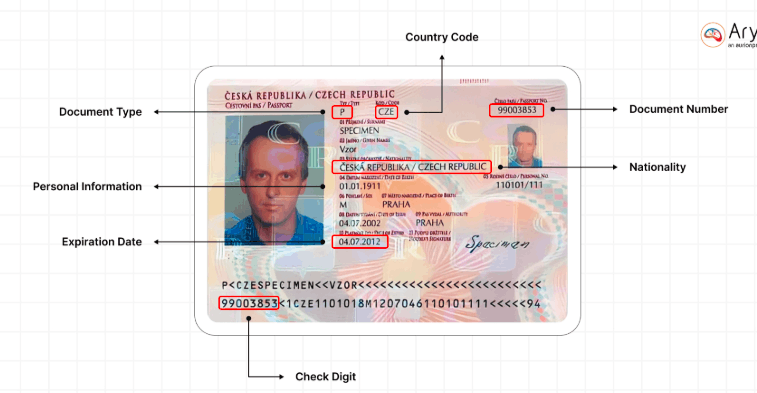
The Structure of a Passport
A modern passport is designed with multiple security and identity elements to ensure authenticity, prevent forgery, and enable reliable identification. The key components include:
1. Cover and Physical Security Features
The passport cover typically displays the issuing country’s emblem and includes special materials and coatings. Many passports use anti-counterfeit printing, UV ink, microtext, and holographic elements to enhance security.
2. Personal Information Page (Data Page)
This is the most critical page of a passport. It contains the passport holder’s personal details such as full name, nationality, date of birth, passport number, date of issue, and expiration date. Most modern passports embed biometric data, including a digital photograph and sometimes fingerprints.
3. Machine Readable Zone (MRZ)
Located at the bottom of the data page, the MRZ contains encoded information in a standardized format defined by ICAO (International Civil Aviation Organization). It enables automated reading by border control systems and OCR technologies.
4. VIZ (Visual Inspection Zone)
The Visual Inspection Zone includes human-readable information such as name, passport number, issuing country, and other visible identity details. Unlike MRZ, VIZ is designed for manual inspection but is increasingly digitized using OCR technologies.
5. Visa Pages
These pages are used for entry/exit stamps and visa labels issued by foreign governments. They often include security patterns and watermark features.
6. Electronic Chip (e-Passport)
Modern biometric passports contain an embedded RFID chip that stores digital identity data, making identity verification faster and more secure.
The History of Passports
The concept of passports dates back more than two thousand years. Early forms of travel authorization existed in ancient civilizations, but the modern passport system developed gradually.
Ancient Origins
Historical records suggest that travel permits were used in ancient Persia around 450 BC during the reign of King Artaxerxes. These documents granted safe passage across territories.
Medieval Period
During the Middle Ages, letters of safe conduct were issued by monarchs to allow individuals to travel through foreign lands without harm. These were early predecessors of passports.
19th Century Standardization
With the rise of nation-states and international travel, passports became more formalized. Countries began issuing standardized travel documents containing personal identification details.
20th Century Modernization
After World War I, passports became mandatory for international travel. The League of Nations introduced passport standards, including photograph requirements and uniform formatting.
Biometric Era
In the early 21st century, e-passports were introduced, incorporating biometric identifiers and digital chips. These advances significantly improved border security and identity verification.
Today, passports represent a blend of history, security, and technology—continuously evolving alongside global mobility and digital transformation.
Intelligent Passport Recognition: The Role of OCR
With increasing globalization, organizations need efficient, fast, and reliable ways to process passport information. Manual entry is slow and prone to errors. This is where Optical Character Recognition (OCR) technology plays a crucial role.
Sinosecu Technology Corporation is a leading provider of advanced Passport OCR solutions designed to accurately extract passport data across multiple countries and formats.
Our technology focuses particularly on VIZ (Visual Inspection Zone) recognition, which enables extraction of visible passport information even when MRZ scanning is not available or when documents vary in format.
Applications of Passport OCR
Passport OCR technology is widely used across many industries:
Hotel Check-in and Hospitality
Hotels can automatically capture passport information during guest registration, reducing manual typing and improving accuracy. This speeds up check-in and enhances customer experience.
Banking and Financial Services
Banks require identity verification for account opening and compliance (KYC/AML). Passport OCR enables fast and accurate identity data extraction, reducing operational costs and improving onboarding efficiency.
Visa Processing and Immigration Services
Government agencies and visa centers handle large volumes of passport data daily. Automated OCR solutions improve speed, reduce errors, and streamline document processing workflows.
Travel and Airline Industry
Airlines and travel agencies can digitize passport verification during booking or check-in, enhancing operational efficiency and security.
Sinosecu Passport OCR Solution
Sinosecu Technology Corporation provides a robust and scalable Passport OCR system with the following advantages:
· Recognition of multi-country passport VIZ
· High accuracy under various lighting and image conditions
· Fast processing suitable for real-time applications
· Easy integration via SDK/API
· Supports global identity verification scenarios
Our solution is designed for enterprises, governments, financial institutions, hospitality providers, and travel services that require reliable and efficient passport data extraction.